As everyone is now firmly into their rhythm of 2026, we though what better way than to drop a few gems that address us at every level. You know our pillars and in this edition we try to cover as many of them as possible. Start with amazing identity shift and end on something a bit more aligned to our morals around fitness and creators.
What’s In Store
What’s In Store:
MOTIVATE: Can you really fix your life in 1 day?
THINK: 2 sets are all the rage at the moment, what’s inside the hype
LEARN: Can you pharmaceutically lose fat and halt muscle mass at the same time?
PRACTICE: What is the least amount of volume needed to maintain?
CURATE: A very different update just for this version - where does Epstein affect fitness?
MOTIVATE
(Straight up motivation to fuel your workouts)
The power of knowing who you don’t want to be

Referenced from Dan Koe’s excellent post: How to fix your entire life in 1 Day
If you are not already familiar with Dan Koe - oh boy, you’re in for a treat. We highly recommend you read the full piece, it’s one of the most comprehensive and raw breakdowns of identity change and personal transformation we've seen in a while (it’s very long but totally worth it). But to keep this brief (as we always try to do), one section in particular really stuck with us:
The Anti-Vision.
What is an Anti-Vision?
It’s not your “dream life” or the Pinterest board version of your best self. It’s the opposite.
It’s a brutally honest snapshot of the life you’re on track to live if absolutely nothing changes.
Not rock-bottom. Just stagnation. Quiet regret. A life of tolerating what you swore you’d escape.
It’s not about punishment, it’s about pattern recognition. We often move away from pain faster than we move toward pleasure. Anti-vision gives that pain a face.
Why it hit home for us
Because we’ve all already lived versions of it.
The "meh" version of your career. The version where you’re just healthy enough to get by. The friendships you maintain out of habit. And if we’re being honest, we all know someone five, ten, twenty years ahead of us living the exact life we don’t want to end up with.
That’s the power of anti-vision: it puts a future in front of you that you can viscerally reject.
Sometimes the wake-up call isn’t “what do I want?”
It’s: “what am I on track to become if I don’t wake up?”
How to construct your own (Quick version)
Dan offers a deep dive with 11 questions on this section alone, but if you want a quicker route, try this:
What are 3 things you constantly complain about but haven’t changed?
If you repeated the last 12 months for 10 years, what does your life look like?
Who in your life is already living that outcome? How does that feel?
What version of yourself do you fear becoming, but might be inching toward?
What does that person’s day look like? Morning? Evening? Self-talk? Body?
Write the answers. Keep them close. It’s your Anti-Vision.
How to use it daily?
We’re not telling you to use negativity as fuel forever, that burns out.
But a brief daily check-in with your Anti-Vision can be powerful accountability.
Every morning or evening, ask:
“Am I getting closer to that version of me, or further away?”
Use it to snap back to attention.
Pair it with goals, vision, and identity work , but keep it in the toolkit.
Because forgetting what you’re trying to escape is how people end up stuck.
Lastly…
And one last thing. It’s easy to keep skimming these ideas like another Instagram quote carousel or motivational email and not actually pause to feel what’s being said. But if we’re being really honest with ourselves, and we have to be here - the thing many of us need most isn’t a better strategy, a new planner, or a productivity hack. It’s to stop avoiding the truth we already know. There’s an avoider in all of us - the part that silently dreads facing the version of ourselves we’re becoming by default, the one that creeps in quietly when we’re too busy, distracted, or numbing out. We’ve postponed this conversation with ourselves for weeks, months, maybe years. But one day you wake up and realise you’ve become the thing you said you never would. Don’t let that be your story. Please, take some time, even if it’s just ten minutes, and face it head-on. The future is shaped by the moments we stop running.
THINK
(Your dose of critical thinking to bullet proof the mind)
Is two sets really king?
Let’s give the “2 sets” movement its due credit. It’s gaining steam online for a reason and not just because it sounds contrarian.
Truth is:
Two sets work.
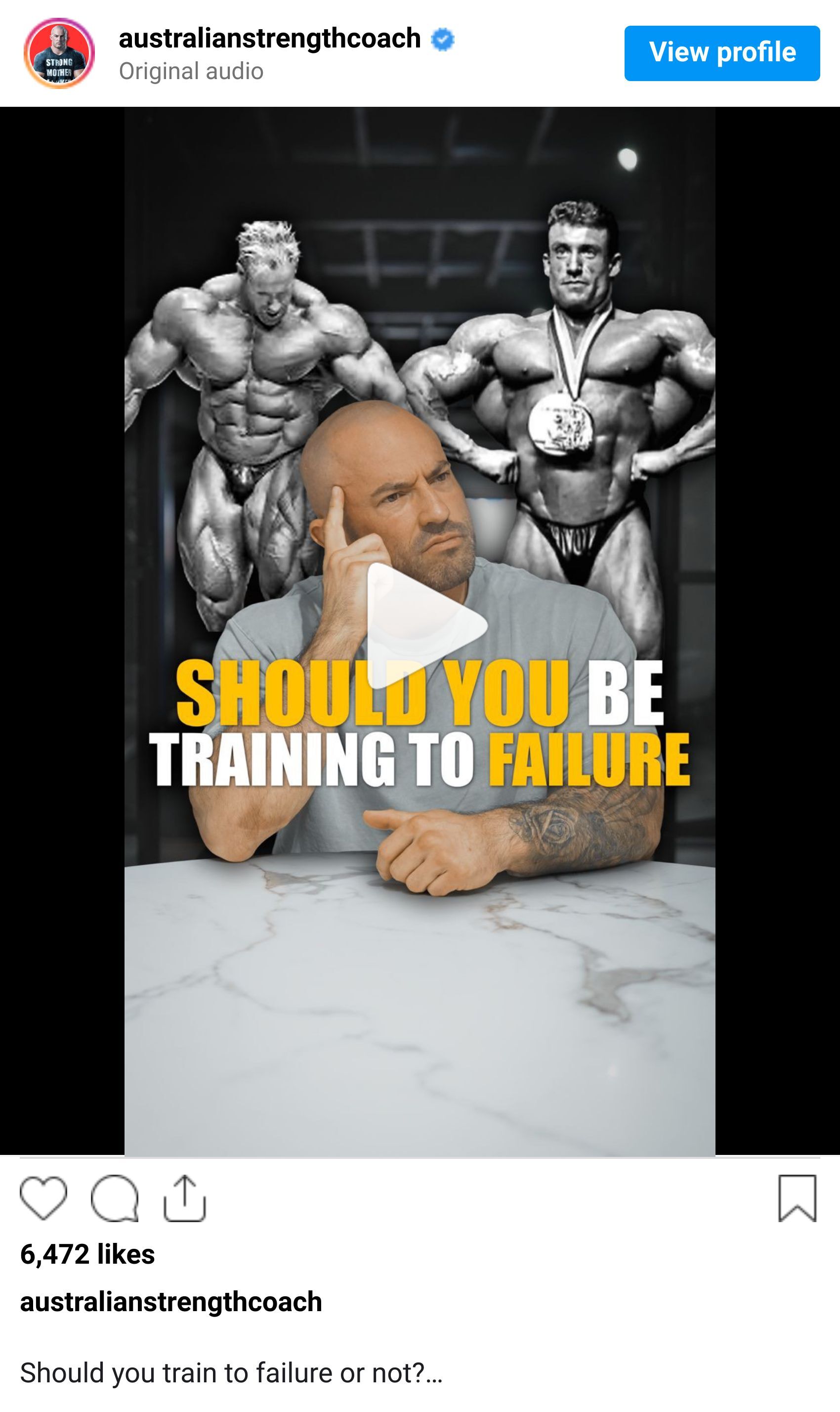
They’re a huge time-saver, they teach you intensity, and they cut the fluff. If you’ve ever trained with true failure-level effort, Dorian Yates–style, you know one set can wreck you for days. Add a second, and that might be all you need.
Especially if you’re adding running or other sports to your training schedule (hybrid athletes, we see you), this style of training is highly practical. You don’t have 90 minutes to hover around dumbbells. You’ve got an hour, maybe less. Two focused, all-out sets per lift lets you get in, get out, and still make gains.
Here’s a creator that explains this perfectly:
And we’re not going to pretend this doesn't deliver results. It does. Plenty of people are stronger, leaner, and more consistent because of it. The influencer’s video we referenced makes a strong case: most people don’t train too little, they just train too comfortably. Two sets forces focus. It removes your cushion. That’s powerful.
But here’s where we need to slow down.
We’ve been here before.
Every few years, this debate resurfaces: volume vs. intensity.
Jay Cutler famously trained with volume and pump-style work, rarely going to absolute failure. He did just fine. Many lifters thrive on more sets, more reps, and submaximal effort across the session, especially if they enjoy the process, can recover well, and want to stay injury-free.
Also…2 sets and pure intensity work may not be easy to programme if your’e new to the intensity game:
When you’re working with only 2 sets, increasing total volume over time (which is a key driver of hypertrophy) becomes mechanically constrained. Using an example (intensity is assumed equated across all reps):
10kg × 15 reps × 2 sets = 300kg of total volume
To progress with 11kg, you’d need something like:
11kg × 14 reps × 2 = 308kg (a slight improvement - but 14 reps with a heavier load is tough)
If you can only do 11kg × 10 reps, that’s 220kg - a significant drop.
So unless your reps scale perfectly with load (which they often won’t), your weekly volume progression gets bottlenecked. This makes it harder to apply small incremental overloads, especially for less experienced lifters or during periods of fatigue.
The usual solution is to:
Increase load and try to maintain reps (not always doable)
Use advanced techniques (e.g. rest-pause, drop sets, myo-reps)
Or, the simplest one: add a third set, which gives more breathing room to nudge volume up without jumping load or reps dramatically.
So which approach is right?
Here’s the truth: They both work.
This isn’t about science. We’ve seen enough data to confirm that multiple paths can build muscle and strength. The real question is: what’s sustainable for you? What matches your time, goals, recovery, lifestyle, and training maturity?
A Simple Mental Model to Decide:
Hybrid or time-crunched? Two sets per lift might be perfect. Prioritize intensity, cut fluff, move on.
New to training? Two sets can be tough to calibrate. You need time to learn movement quality and build mind-muscle connection. Start with moderate volume and gradually raise intensity.
Older lifter? Managing stress or recovery issues? Moderate volume, submax failure might be more sustainable long-term.
Chasing hypertrophy and you love training? Enjoy the pump, enjoy the gym, volume-based training isn’t wrong, as long as you push where it counts.
This isn't about picking sides. It’s about being honest with what you’re ready for and what you can consistently show up for.
If you’re coasting through 5 sets, try 2.
If you’re burning out on failure every week, back off.
Choose the hard that works for your life.
And don’t confuse "simple" for "easy" - either path demands effort.
LEARN
(Top tier research broken down to better understand fitness and health)
Can we now pharmaceutically limit muscle loss? Early trials are promising (and also dangerous)…
Core research question
Research methodology
This is an interim analysis from an ongoing phase 2 randomized controlled trial (COURAGE). The trial enrolled 605 adults with obesity (BMI ≥30) without diabetes and randomized them to receive semaglutide alone or semaglutide combined with investigational monoclonal antibodies targeting muscle-regulating pathways. These included trevogrumab (a myostatin inhibitor) at two doses and a triple combination adding garetosmab (an activin A inhibitor). Body composition was assessed using DEXA scans over 26 weeks, with outcomes focused on lean mass, fat mass, and total weight loss. Safety and adverse events were closely monitored.
Key outcomes
Participants receiving semaglutide alone experienced significant weight loss, but a substantial portion came from lean body mass. At 26 weeks, semaglutide alone resulted in an average 6.5% reduction in lean body mass, equivalent to approximately 3.3 kg of lean mass loss, alongside about 6.7 kg of fat mass loss, despite total body weight decreasing by roughly 10%.
Adding the myostatin inhibitor trevogrumab meaningfully altered body composition outcomes. When combined with semaglutide, lean mass loss was reduced to 3.3% with trevogrumab 200 mg and 3.8% with trevogrumab 400 mg, corresponding to only 1.5–1.9 kg of lean mass loss, while total weight loss remained similar to semaglutide alone (~10%). Fat mass loss increased to 7.6 kg with trevogrumab 200 mg and 8.5 kg with trevogrumab 400 mg.
The triple-combination arm (semaglutide + trevogrumab 400 mg + garetosmab) produced the most dramatic body composition shift. Participants lost approximately 13.4% of total body weight, including 11.8 kg of fat mass, while lean mass loss was limited to just 0.9 kg (about 2.0% from baseline). This represented the largest fat loss and greatest lean mass preservation across all groups.
However, these superior composition outcomes came at a cost. Serious adverse events were substantially higher in the triple-combination group (14 events, including two deaths) (yikes WTH), compared with one to two serious events in the other groups. Treatment discontinuation due to adverse events occurred in 30.9% of participants in the triple-combination arm versus ~5% with semaglutide alone or semaglutide plus low-dose trevogrumab. Muscle spasms were particularly prominent, occurring in 40.9% of triple-combination participants compared with 4.6–9.3% in the other groups.
Overall, dual therapy with trevogrumab achieved meaningful lean mass preservation and greater fat loss without a major increase in adverse events, whereas the more aggressive triple combination, while biologically potent, raised significant safety and tolerability concerns.
Practical takeaways
There is no immediate practical application for the general population. These agents are investigational, not approved, and not accessible outside clinical trials. The primary value of this study is not guidance for training or nutrition, but insight into how pharmaceutical strategies for obesity are evolving. The results reinforce that GLP-1–induced weight loss commonly includes clinically relevant muscle loss and that preserving lean mass is now a major therapeutic target. This work suggests future obesity treatments may involve combination therapies that aim to selectively reduce fat while protecting muscle tissue.
Study limitations
These are interim phase 2 results, not definitive clinical evidence. Long-term outcomes, functional performance, and durability of muscle preservation remain unknown. The trial population excluded people with diabetes, limiting generalizability. Safety remains a major concern, particularly with more aggressive combination approaches. Phase 3 trials are required before any conclusions about clinical utility, tolerability, or real-world use can be made.
My takeaway
Apart from the obvious safety and tolerance concerns!! This study shouldn’t be read as advice or a near-term solution - it’s a signal. The real takeaway is that the obesity drug landscape is shifting beyond “weight loss at any cost” toward body-composition–aware pharmacology. As GLP-1 drugs become more widely used, muscle preservation is emerging as the next frontier.
What’s especially important is that this research acknowledges a reality many clinicians and lifters already understand: losing weight pharmacologically without regard for muscle mass has consequences for strength, metabolic health, and long-term function. However, these drugs are not a replacement for resistance training, protein intake, or lifestyle intervention. At best, they may one day become adjuncts for high-risk populations, such as older adults or individuals with severe obesity.
In short, this isn’t about what you should do differently right now - it’s about where the industry is heading next. The future of weight-loss medication is not just about losing more weight, but about losing the right tissue.
Link to the article below:

PRACTICE
(Weekly practical workout, diet and health protocols)
Ever heard of maintenance volume?
We all know about progressive overload - the gold standard of hypertrophy, but here’s a concept you may not think about enough:
What’s the minimum amount of training you need to simply maintain your current muscle mass?
That’s what Maintenance Volume (MV) is all about.
What is maintenance volume?
Maintenance Volume (MV) is the least amount of hard training (measured in working sets per week per muscle group) required to hold on to the muscle you already have.
It’s part of a trio of important training volume landmarks:
Volume Type | What it Means |
|---|---|
MV – Maintenance Volume | Minimum to maintain current muscle mass |
MEV – Minimum Effective Volume | Minimum to stimulate growth |
MRV – Maximum Recoverable Volume | The most volume you can do and still recover from |
Think of MV as the idle mode for your muscle - you’re not accelerating, but you’re not losing ground either.
Why should I care?
Knowing your MV is incredibly useful - especially when:
You're injured, busy, or low on recovery (e.g. sleep, calories, stress)
You're on a cut and just want to preserve lean tissue (although here we would encourage you to train as per normal)
You're focusing on a hybrid phase (e.g. more running, sports-specific work)
You need a deload or travel week but don’t want to lose progress
It’s a key tool for training flexibility and long-term sustainability.
How do you estimate it?
While MV is highly individual, some ballpark estimates:
Well-trained individuals: ~6–8 hard sets per muscle per week
Less-trained beginners: may maintain with even less (4–6 sets/week)
Highly trained or fast-recovering lifters: may need slightly more (8–10+)
Apologies if this isn’t a lot more scientific - the key is to understand the spectrum between your upper limit (MRV), your current volume, and your lower limit (MV). Somewhere in that range lies the sweet spot, and it’ll take some experimentation and reviewing your training logs to get a real feel for it.
The idea isn’t exact math - it’s understanding that maintenance is much easier than growth, and most of us are doing way more than needed to simply hold our gains.

Let’s take chest as an example
Let’s say your usual chest training looks like this:
Bench Press – 4 sets
Incline Dumbbell Press – 3 sets
Cable Fly – 3 sets
Total = 10 sets per week
That’s likely in your MEV-MAV (Maximum Adaptive Volume) range. If you’re aiming to maintain, you could cut back to something like:
Bench Press – 3 sets
Cable Fly – 2 sets
Total = ~5 sets per week
Spread over 2 sessions (e.g. 2–3 sets per session), done at decent intensity (close to failure), that’s probably enough to retain size and strength - especially when calories are low or recovery is compromised.
Other Relevant Notes
MV is specific: You can be maintaining your chest while growing your legs, or vice versa.
Intensity still matters: You can't just go through the motions. Sets need to be within ~3 reps of failure.
Frequency helps: Better results when you split those sets across 2–3 sessions a week vs. cramming into one day.
Nutrition matters: Without enough protein and calories, even MV might not hold things together.
Bottom line: You don’t need to be pushing full throttle all the time. Sometimes, knowing when to dial back (and how much) is the smartest move in your training toolkit.
CURATE
The roundup (a collection of some of the latest and most useful content from around the internet):
This week is a bit different, we need. to address the Epstein elephant in the room (Peter Attia):
To kick off let’s share some context. Peter Attia a well known fitness, health and longevity creator (that we have featured countless times in our newsletter) has appeared ±1700 times in the Epstein files (if you’re not sure what those are, do a quick Google search).
Here is what some creators are saying in response:

And what he said in response:
Here is our view/response on the matter:
Over the years, we’ve featured Peter Attia’s work many times. That wasn’t accidental. His content on longevity, metabolic health, and prevention has generally been thoughtful, rigorous, and grounded in a serious engagement with the science. As a curator of health and fitness content, we’ve consistently viewed him as a top-tier creator whose ideas were worth engaging with, even when we didn’t agree with every position.
However, recent disclosures require us to pause and reassess.
At face value, a few things are now undisputed. Peter Attia does appear in the Epstein files, something he has acknowledged himself. His released correspondence includes language and behavior that is, by his own admission, embarrassing, tasteless, and indefensible. Separately, he is already facing tangible professional consequences, including stepping down from advisory and leadership roles at major companies.
It’s also important to be precise. Attia has issued a detailed statement denying any involvement in criminal activity, denying any participation in or awareness of abuse, and denying travel to Epstein’s island, ranch, or aircraft. He frames his involvement as a serious failure of judgment, naïveté, and poor discernment rather than wrongdoing. That distinction matters, and we acknowledge it.
At the same time, proximity matters. Judgment matters. And values matter.
As a publication, we take issues involving women, and especially young women’s safety extremely seriously. Regardless of intent, the language used in the released emails is abhorrent. Even if no criminal conduct is ultimately proven, the association alone places this situation outside the line we’re willing to stand behind right now.
For that reason, we’ve made a clear decision: we will not be featuring or promoting Peter Attia’s content going forward, unless and until materially new information emerges that meaningfully alters the situation. This is not about punishing, piling on, or virtue signalling. It’s about drawing a boundary that aligns with our values.
We want to be clear about something else too. We disagree with influencers all the time. We don’t need to like someone’s personality, politics, or worldview to support objectively good advice. Our default position has always been to back strong ideas wherever they come from. But this is where we draw the line.
More broadly, this is also a moment worth reflecting on how we relate to influencers in general.
It’s natural to revere people who embody a level of health, discipline, or success we aspire to. In fitness and longevity especially, influencers often represent a life we want to move toward. But admiration should never slide into uncritical loyalty or hero worship. You are allowed and encouraged to take what is useful, discard what isn’t, and walk away entirely when something no longer sits right.
Morals and health should never be at odds with each other. Maintaining a clear moral compass in this space is not complicated, and you should never feel obliged to stick with a creator out of habit, identity, or sunk cost. Influencers are just that: influencers. No protocol, podcast, or philosophy is worth sacrificing your values over.
We’ll continue doing what we’ve always done, curating the best ideas we can find, questioning them openly, and holding ourselves to a standard we’re comfortable standing behind.
Thank you for trusting us to navigate this thoughtfully and transparently.
To everyone that keeps reading and keeps helping to grow this newsletter I truly appreciate you. If you know of anyone in your immediate circle that may enjoy this newsletter please just forward this newsletter to them and tell them to subscribe at the link below:

Wishing you all the best in your fitness journey
The FitnessHacker
